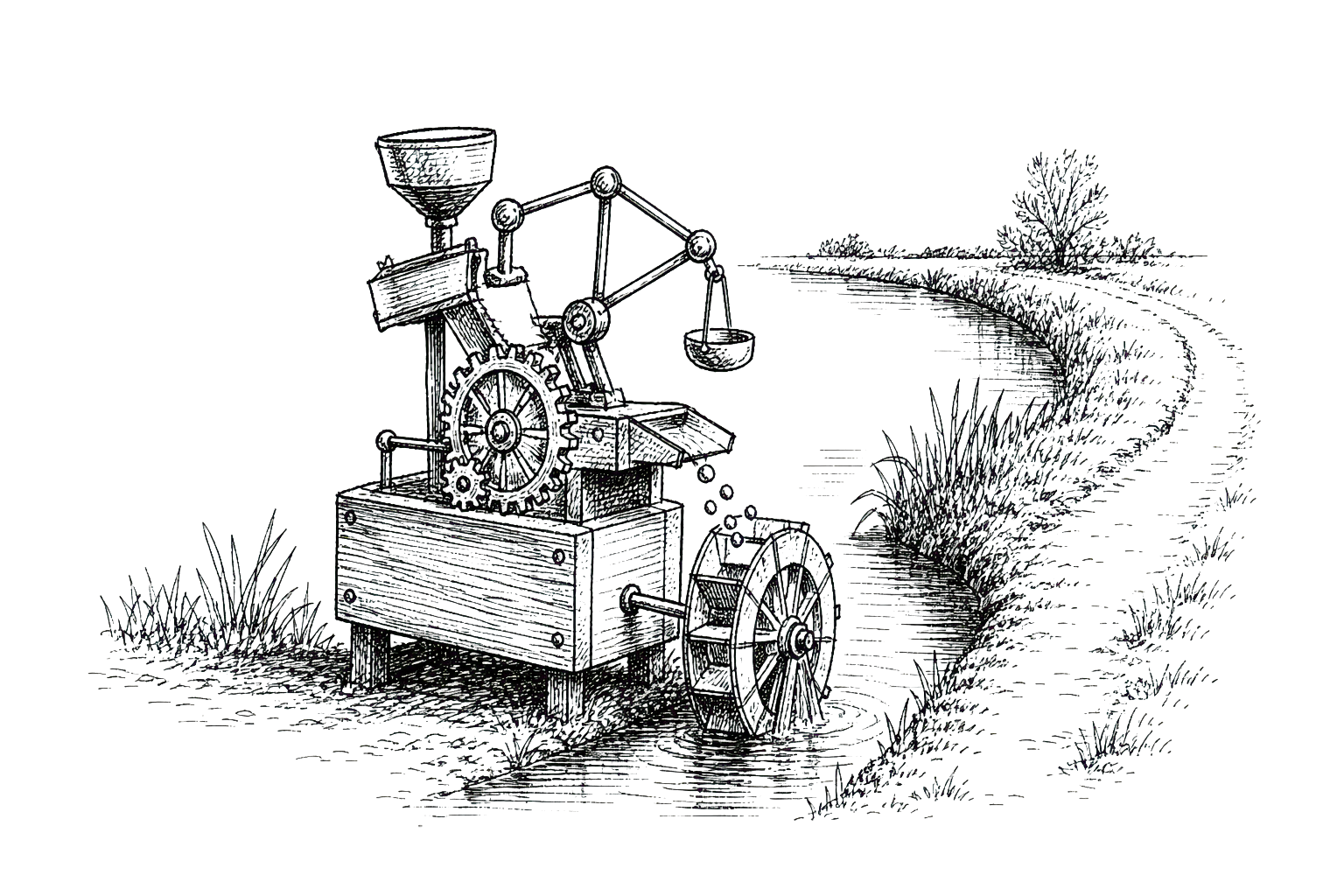
Plate XX.
Twitter/X AI + Agentic Age: Agent Workspaces.
Annales agentici, martii i–xiv, agent workspaces and the small machinery of autonomy. Observed March 2026.

Dates: March 1-14, 2026
Source note: I filtered my X bookmarks by tweet
postedAtdate. The bookmarks API gives the tweet date, not the exact date I bookmarked it, which is an annoying but useful distinction.
The first two weeks of March had the peculiar feeling of everyone discovering the same architectural problem from different entrances. Cursor announced always-on automations, OpenAI shipped GPT-5.4 with native computer use, Claude pushed local scheduled tasks and million-token context, and Replit framed Agent 4 as creative collaboration rather than just software generation.
The obvious version is that agents got better. The more precise version is that agents started needing places to live: schedules, sandboxes, computers, browsers, worktrees, and ways to hand work between local and cloud contexts without turning the developer’s machine into a haunted filing cabinet.
Karpathy’s “we’re going to need a bigger IDE” line was the cleanest crystallization of the period. The problem is not that the IDE is over. The problem is that the old IDE assumed the unit of work was a human editing files, and the new one increasingly assumes the unit of work is an agent pursuing a goal across files, browsers, terminals, and time. This seems like a UI problem until it becomes an operations problem, at which point the interface starts looking less like VS Code and more like mission control with better typography.
Key movements
Always-on agents arrived as product, not metaphor. Cursor Automations, Claude scheduled tasks, and the Codex/Cursor/Replit cadence all treated the agent as something that can keep working after the user has stopped staring at it. That is a small sentence with a large blast radius, because background work immediately creates questions about state, intent, interruption, and who gets paged when the thing finishes.
Computer use became the missing loop closure. GPT-5.4 could write Playwright, read screenshots, and issue keyboard and mouse actions, while agent-browser was moving toward native Rust and direct Chrome DevTools Protocol control. The agent could now test more of the thing it had built, which sounds like a convenience until you remember how many software failures survive because nobody clicked the result.
The interface question got sharper. Karpathy’s bigger-IDE framing, Codex Windows, Raycast Glaze, Replit Agent 4, and Claude’s charts and diagrams all pointed at the same thing: agents need surfaces where work can be inspected, resumed, and corrected. A chat transcript is useful evidence, but it is a poor workplace.
The danger became concrete. Alexey Grigorev’s production database wipe was the kind of incident that makes the abstract phrase “agent permissions” suddenly sound less like compliance furniture and more like plumbing. The lesson was not that agents are reckless. The lesson was that delegation without permission design is just speed with a blindfold.
Representative signals
| Date | Actor | Why it mattered | Link |
|---|---|---|---|
| Mar 1 | Chris Tate | agent-browser added Electron control, making desktop apps part of the agent surface. | View |
| Mar 4 | Addy Osmani | Google Workspace CLI made Gmail, Drive, Calendar, Docs, and Sheets agent-addressable. | View |
| Mar 5 | OpenAI Developers | GPT-5.4 brought native computer use, 1M context, and stronger agentic coding. | View |
| Mar 5 | Cursor | Cursor Automations pushed coding agents into always-on background work. | View |
| Mar 6 | Alexey Grigorev | Claude Code wiping a production database became the cautionary tale everyone needed and nobody wanted. | View |
| Mar 11 | Andrej Karpathy | The bigger IDE became the period’s best mental model. | View |
| Mar 12 | Claude | Interactive charts and diagrams showed Claude choosing mediums, not just paragraphs. | View |
| Mar 13 | Claude | 1M context became generally available for Claude Opus and Sonnet 4.6. | View |
Engagement ledger
| Tweet | Engagement |
|---|---|
| Claude interactive charts and diagrams | 42.7K likes, 11.8M views |
| Claude 1M context window | 25.1K likes, 5.7M views |
| OpenAI GPT-5.4 rollout | 23.7K likes, 7.0M views |
Cloudflare /crawl endpoint | 19.8K likes, 10.6M views |
| Addy Osmani on Google Workspace CLI | 15.0K likes, 5.4M views |
| Claude local scheduled tasks | 13.5K likes, 3.7M views |
| Claude Code production DB wipe | 10.9K likes, 4.2M views |
| Karpathy on the bigger IDE | 10.6K likes, 2.5M views |
The period’s summary line, then: the agent stopped being a tab and started needing a workplace. That workplace includes UI, yes, but also policies, filesystem boundaries, execution contexts, event loops, and evidence trails. In other words, the agentic age did not begin by abolishing ordinary software. It began by making ordinary software unavoidable.